
EW CEIR for National-Level Mobile Device Control

Stops stolen, counterfeit, and grey-market phones from connecting to any network in the country.

Request EW CEIR demo
30,000 TPS IMEI verification speed
200 million registered IMEIs
99.999% system availability

Monetize mobile device registration—CEIR enables collection of fees for every registered phone.

Reduce the number of counterfeit and smuggled devices. Legalize imports and generate additional revenue using IMEI tracker.

Lower mobile phone theft rates. Block suspicious devices to ensure national security, prevent terrorism, and stop anti-state activities.

Manage mobile device certification using an IMEI database to meet regulatory requirements.

Additional Opportunities
for Regulators

EW CEIR can be adapted to support non-standard use cases.

Public platform to facilitate buying and selling devices on the secondary market
Monitoring of corporate subscriber device usage
National Property Register (NPR) for registering ownership of digital equipment

Why EW CEIR

[ 01 ]

Flexible Pricing Policy

Reduce payback time with flexible fees for registering new devices.
[ 02 ]

Easy Logic Adjustment

A built-in scripting language (LUA) allows changes to IMEI verification logic without recompiling source code.
[ 03 ]

Real-Time Triggers

Track changes in IMEI–IMSI–MSIDSN combinations and configure automated responses.
[ 04 ]

Lower Implementation Costs

EW CEIR system components run on open-source software: Oracle Linux, Red Hat Enterprise Linux, PostgreSQL.
[ 05 ]

System Resource Optimization

Lower RAM usage for IMEI database checks thanks to specialized data structures.
[ 06 ]

Flexible Deployment Options

Deploy the system in virtual environments or on any x86-based physical servers.

8 CEIR Use Cases

Discover which challenges faced by government regulators the system addresses and what results it delivers.
Get the ebook

The Turnkey CEIR Project

Southeast Asia
  • Registration of up to 200 million IMEIs, with approximately 100 million active devices
  • Processing of 30,000 transactions per second
  • Installation and integration with the EIRs of four mobile operators
  • Integration with customs clearance systems, import/export licensing systems, government identity verification services, private banks, and more
  • Modules for tax collection, customer service, and call center operations
  • Training for the client’s team on CEIR operations

How It Works

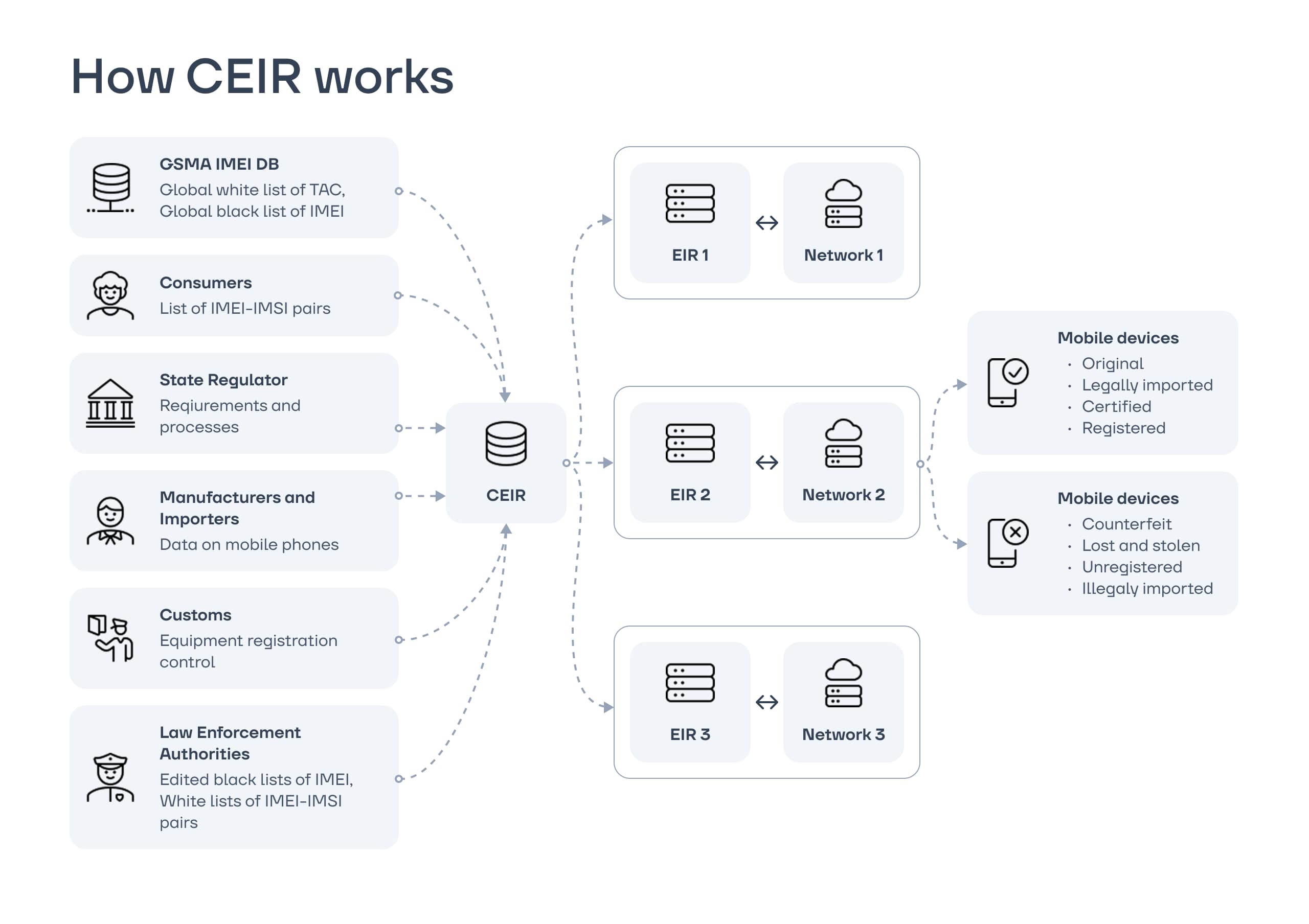
When a device connects to an operator's network, its EIR checks with CEIR: the system verifies the device's IMEI and its IMEI–IMSI pair to determine whether it's legitimate. Depending on the device's status, the relevant action follows—registration, notification, payment, blocking, or manual review. The resulting status is then shared with all operators, the regulator, customs, law enforcement, and GSMA.

EW CEIR Capabilities

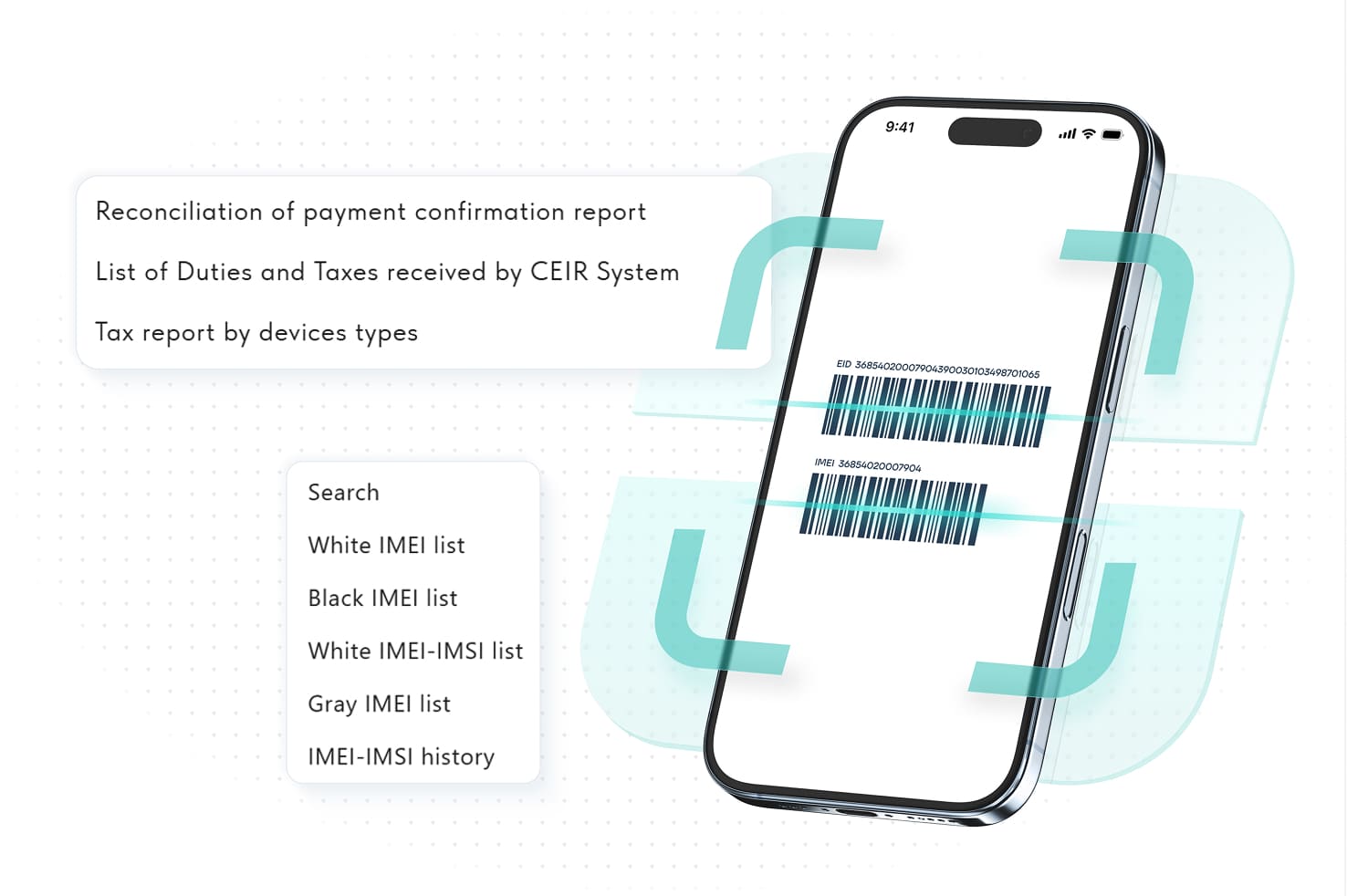
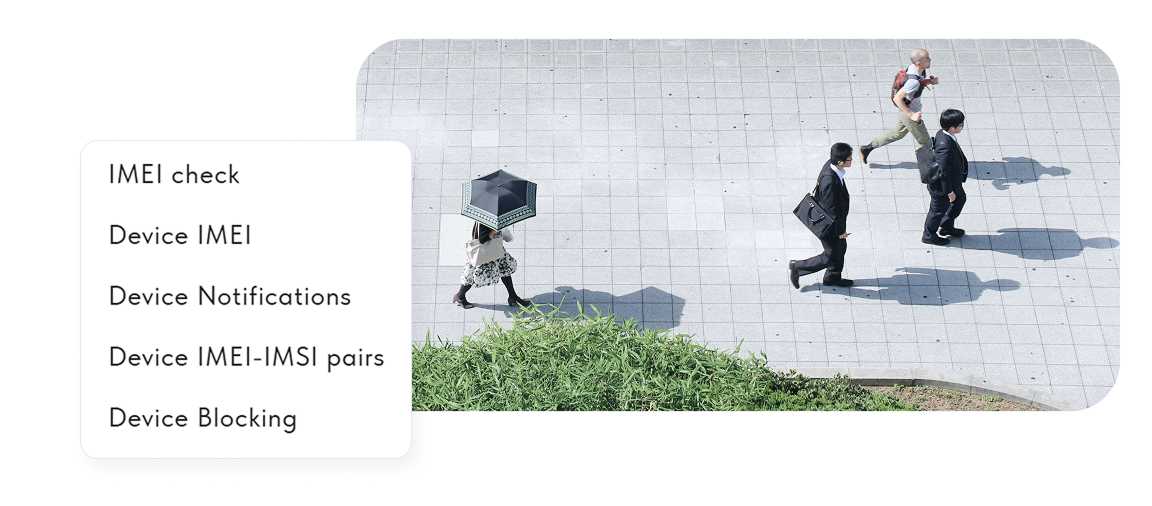
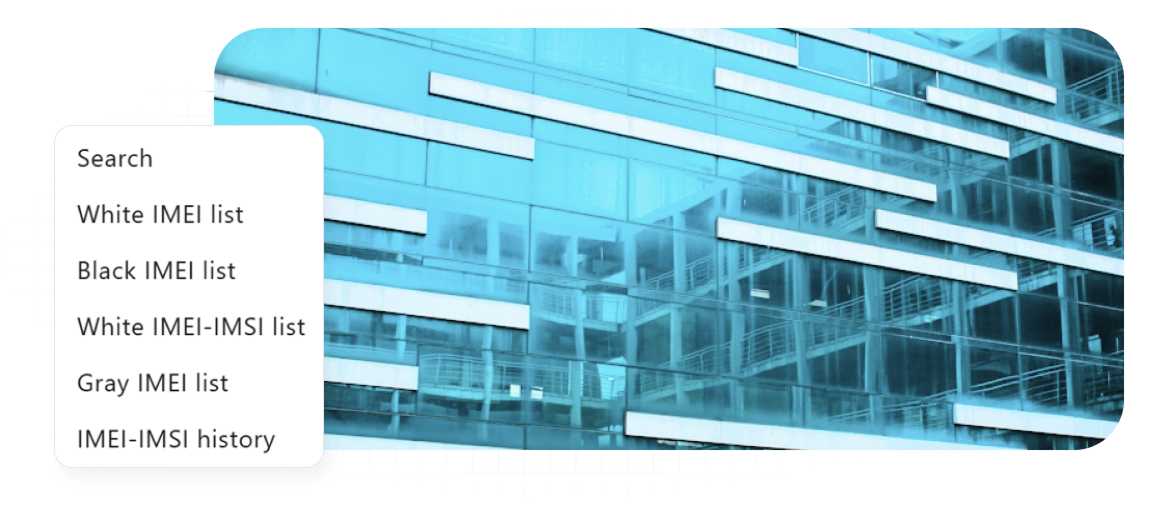
  • Create and manage IMEI lists (Black, White, Gray) in both automatic and manual modes
  • Register legal phones for domestic use
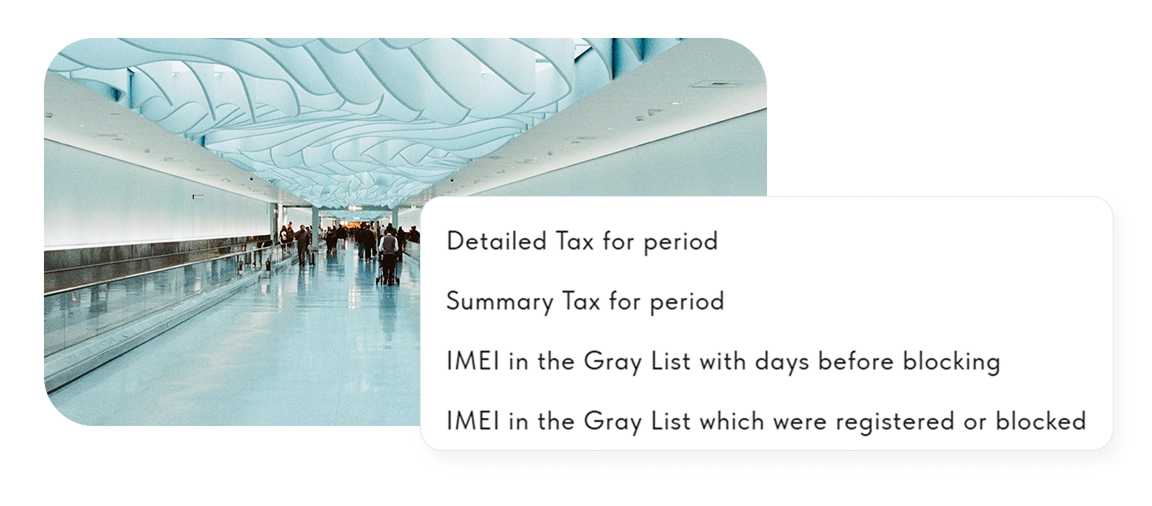
  • Calculate registration fees for mobile devices and integrate with external payment systems
  • API integration with government systems for data exchange
  • Record stolen and lost devices using CEIR mobile tracking
  • Notify subscribers about events related to device registration
  • Detect devices with duplicate IMEIs
  • Generate analytical reports

Implementation
Stages

  • 1
    Regulatory Framework Preparation
  • 2
    System Deployment
  • 3
    Pilot Operation
  • 4
    Commercial Operation
Regulatory Framework Preparation

CEIR deployment requires legal amendments, so we provide consulting during legislative updates.

System Deployment

We coordinate requirements with the operator of the central IMEI database and adapt the system to the client’s needs. We then install server equipment and deploy the software.

Pilot Operation

We conduct testing and integrate EW CEIR with telecom operators and state automated systems. The system starts collecting information about subscriber devices and users.

Commercial Operation

Following successful testing, we launch the system into production and provide technical support. IMEI verification rules can be updated to match changes in legislation.

FAQ

What is CEIR?

CEIR, or Central Equipment Identity Register, is a centralized IMEI registry used at the national level to verify mobile device legality, manage IMEI statuses and exchange device identity data with operator EIR systems.

How does CEIR differ from EIR?

An EIR operates at the level of a single operator: it stores data on devices in that operator’s network and checks them on connection. CEIR works nationwide, combining data from all operators — if a device is blocked on one network, CEIR passes that status to every other operator’s EIR, blocking it across the country.

Who owns and operates CEIR?

CEIR is a state-run system: it’s typically owned and operated by the telecom regulator or another designated government body.

How does CEIR integrate with operators' EIRs?

CEIR connects to each operator’s EIR and syncs IMEI lists in both directions. When a device appears on an operator’s network, its EIR checks the IMEI against the latest CEIR data; in the other direction, CEIR receives information about new devices and status changes from each EIR. This keeps every operator in the country working from the same data, without separate integrations between them.

Which IMEI lists does the system support?

The system splits devices into three lists. White covers legitimate devices — originals, certified, legally imported, or registered. Black covers devices that get blocked on connection: stolen, lost, or counterfeit. Gray is the middle ground — devices with no clear violation that still need registration or further checks, such as unregistered devices or imports with unpaid duty; their network access can be limited temporarily until the procedure is completed.

Are legislative changes needed to implement CEIR?

In most cases, yes. Launching CEIR requires a regulatory framework that obliges operators to report IMEI data to the central register and gives the regulator authority to block illegal devices. How much needs to change depends on the country — sometimes a regulator’s decree is enough, sometimes a separate law on mobile device registration is required.

What technologies power the system?

The tech stack includes Java, C++, and LUA programming languages, plus PostgreSQL databases with optional ClickHouse integration. Servers run on Oracle Linux or Red Hat Enterprise Linux.

What operating modes does EW CEIR support?

The system operates in three modes:

  • Data Accumulation Mode: Collects information on subscriber devices and users (from 1 month to 6+ months)
  • Amnesty Mode: Bans devices with invalid IMEIs except for specific exemptions (duration: several years)
  • Normal Operation Mode: Full functionality with minimal exceptions

What is EW CEIR’s architecture?

The system features a modular architecture, including:

  • A core module for list management and basic functions of CEIR mobile tracking
  • Specialized modules (“Subscriber Device Registration”, “Payments”, “Tariffication”, “Billing”, etc.)
  • User interfaces for different categories (regulator, importer, customs, public portal)
  • API for external integration (REST API with Swagger documentation)

How is technical support provided?

Support operates 24×7×365. The warranty support period is 12 months and includes consultations, version update notifications, software updates, and assistance in emergencies.

Eastwind’s Clients

We'll help you choose the right solution
Leave a request for a free consultation or ask a question about our solutions. We will contact you within a few days.

    I want to receive emails about industry insights and success stories

    Blog Highlights

    All materials
    This site is registered on wpml.org as a development site. Switch to a production site key to remove this banner.